
Nature’s Most Potent Superfruits
Kakadu Plum
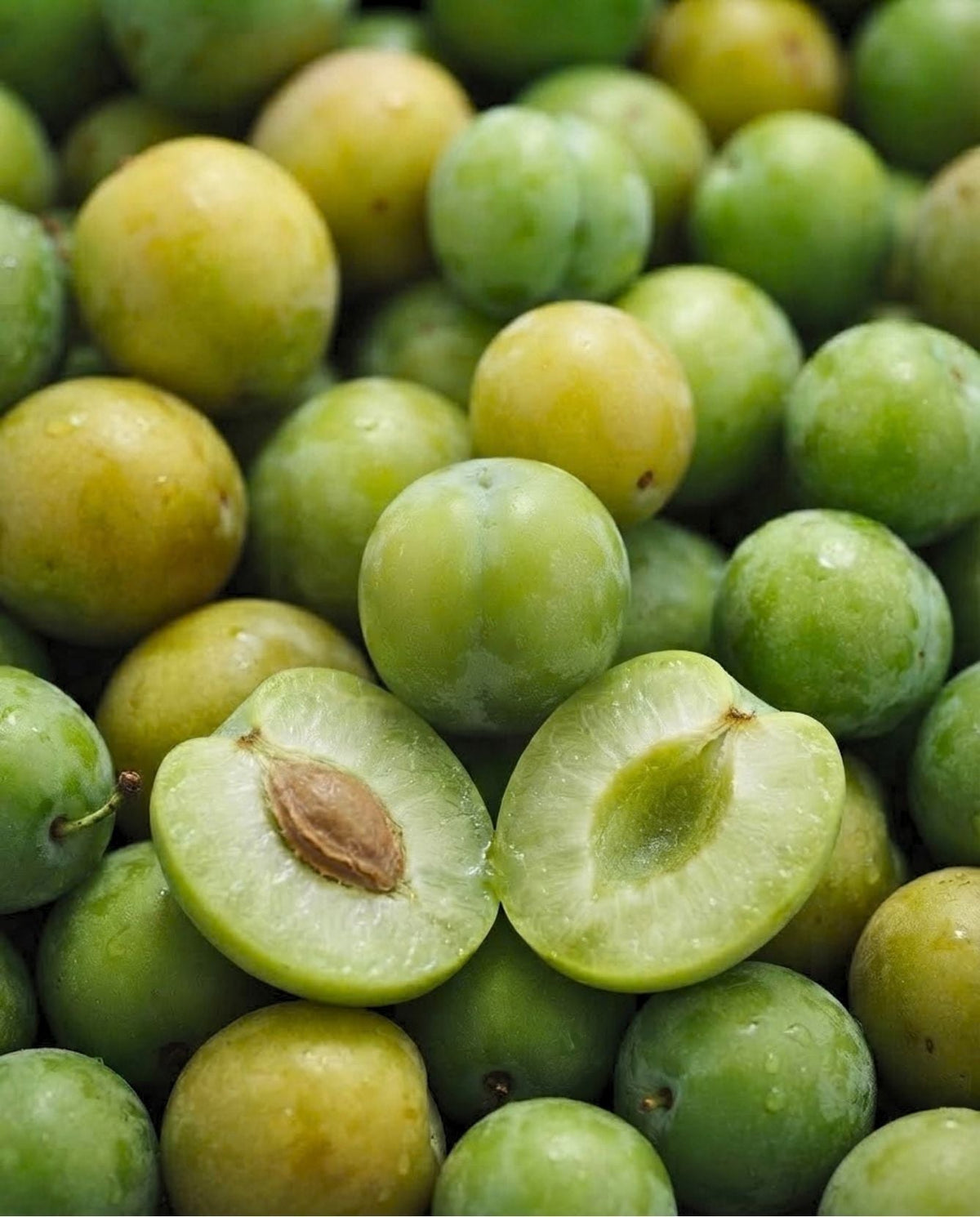
Kakadu plum (Terminalia ferdinandiana) is a small green fruit that grows wild in the tropical woodlands of northern Australia – from the Kimberley in Western Australia, across the Top End of the Northern Territory, to Arnhem Land. For thousands of years it has been bush food for Aboriginal Australians, and the tree has also been part of traditional medicine: its inner bark was used to treat skin conditions.
Its reputation today comes down to one number. Analyses have measured 2,300–3,150 mg of vitamin C per 100 g of fresh fruit – occasionally even more than 5,000 mg. An orange contains around 50 mg. That makes Kakadu plum one of the richest natural sources of vitamin C known.
The fruit is still largely wild-harvested and ripens from around March. You’ll find Kakadu plum fruit extract in our Recovery Serum.
What vitamin C does for your skin
Humans can’t make their own vitamin C, and healthy skin holds high levels of it. Dermatological research points to three main roles:
- Collagen support: vitamin C is an essential cofactor for the enzymes that build and stabilise collagen, and it has been shown to increase collagen gene expression.
- Antioxidant protection: it neutralises free radicals formed when skin is exposed to UV light. In studies, topical vitamin C reduced UV-induced redness and sunburn cells.
- A more even tone: it inhibits tyrosinase, the enzyme behind pigment production.
One honest caveat: pure vitamin C (L-ascorbic acid) is unstable and breaks down with air and light, which is why the form it comes in – and how a product is made and stored – matters.
Prickly Pear
The prickly pear cactus (Opuntia ficus-indica) originates in Mexico and reached the Mediterranean in the 16th century. In southern Morocco – around Sidi Ifni and Guelmim – it has become part of the landscape, and much of the country’s prickly pear seed oil is produced by women-led rural cooperatives.
Each fruit holds many small, hard seeds, and those seeds contain only a little oil: a Moroccan study of seeds from different regions measured 5.4–9.9% oil, 7.8% on average. Producers estimate that it takes around a tonne of fruit to press a single litre – which is why it is one of the most precious oils in skincare.
What makes it special is its composition. Around 60–65% of the oil is linoleic acid, an essential omega-6 fatty acid, and it is rich in vitamin E – around 90% of it in the form of gamma-tocopherol. It also contains plant sterols, mainly beta-sitosterol.
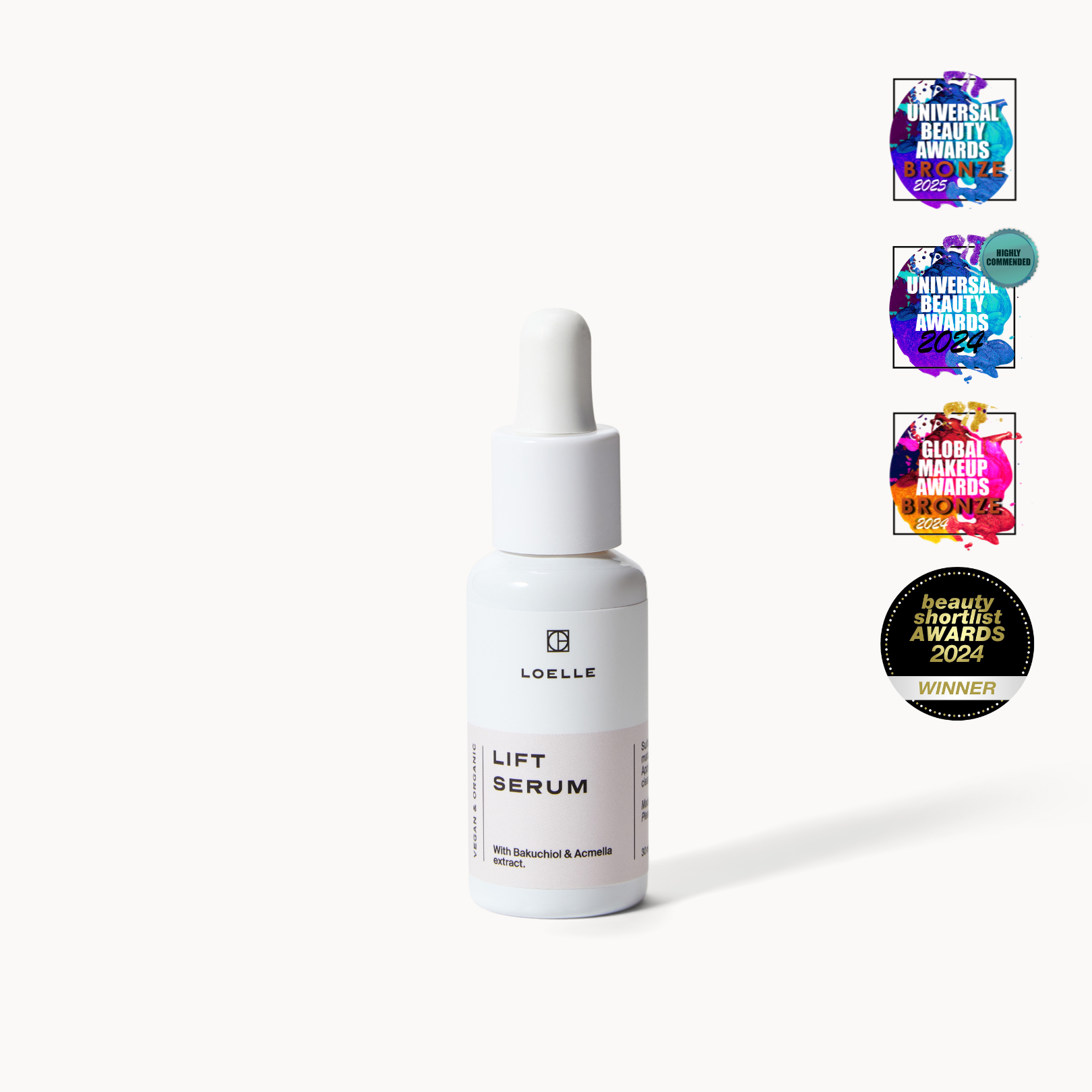
You’ll find prickly pear seed oil in our Lift Serum, alongside Nordic bilberry seed oil.
Vitamin E and linoleic acid
Vitamin E is the skin’s main fat-soluble antioxidant. It sits in the lipids of cell membranes and the skin barrier, where it helps protect them from oxidation.
Linoleic acid is just as important – and, like vitamin C, it’s something the body can’t make on its own. The skin builds it into special ceramides (acylceramides) that hold the barrier together. When linoleic acid is missing, skin becomes dry and scaly and loses more water; in research, restoring ceramides with linoleic acid reduced that water loss, while similar compounds made with other fatty acids had little effect.
Vitamin C meets vitamin E
Vitamin C is water-soluble and vitamin E is fat-soluble, so they protect different parts of the skin. They also help each other: after vitamin E has neutralised a free radical, vitamin C can restore it, so it can keep working.
The research backs this up. In a study published in the Journal of the American Academy of Dermatology, a topical combination of vitamins C and E protected skin against UV damage – redness, sunburn cells and DNA damage – clearly better than either vitamin on its own.
That’s the idea behind pairing our Recovery Serum, with Kakadu plum, and our Lift Serum, with prickly pear seed oil. Antioxidants support your skin, but they don’t replace sunscreen – keep using SPF during the day.
Two fruits, two strengths
| Kakadu Plum | Prickly Pear | |
|---|---|---|
| Botanical name | Terminalia ferdinandiana | Opuntia ficus-indica |
| Grows in | Wild tropical woodlands of northern Australia | Native to Mexico, widely grown in southern Morocco |
| Part used | The fruit, as an extract | The seeds, pressed into oil |
| Key nutrients | Vitamin C (water-soluble) | Vitamin E and linoleic acid (fat-soluble) |
| Role in skin | Collagen support, antioxidant protection, more even tone | Barrier lipids and antioxidant protection of cell membranes |
| Find it in | Recovery Serum | Lift Serum |
Sources
- Kakadu plum – origin, traditional use and vitamin C content (collected references)
- Pullar, Carr & Vissers (2017). The Roles of Vitamin C in Skin Health. Nutrients
- Al-Niaimi & Chiang (2017). Topical Vitamin C and the Skin: Mechanisms of Action and Clinical Applications. J Clin Aesthet Dermatol
- (2015). Oil content and main constituents of cactus seed oils Opuntia ficus-indica of different origin in Morocco. Mediterr J Nutr Metab
- Imokawa et al. (1994). Pseudo-acylceramide with linoleic acid produces selective recovery of diminished cutaneous barrier function. J Clin Invest
- Lin et al. (2003). UV photoprotection by combination topical antioxidants vitamin C and vitamin E. J Am Acad Dermatol